
What it takes to pass long distance carrier vetting.
Insurance, FMCSA safety scores, driver history, and the operational checks TruMove runs before an interstate long distance moving crew is allowed near your household goods.
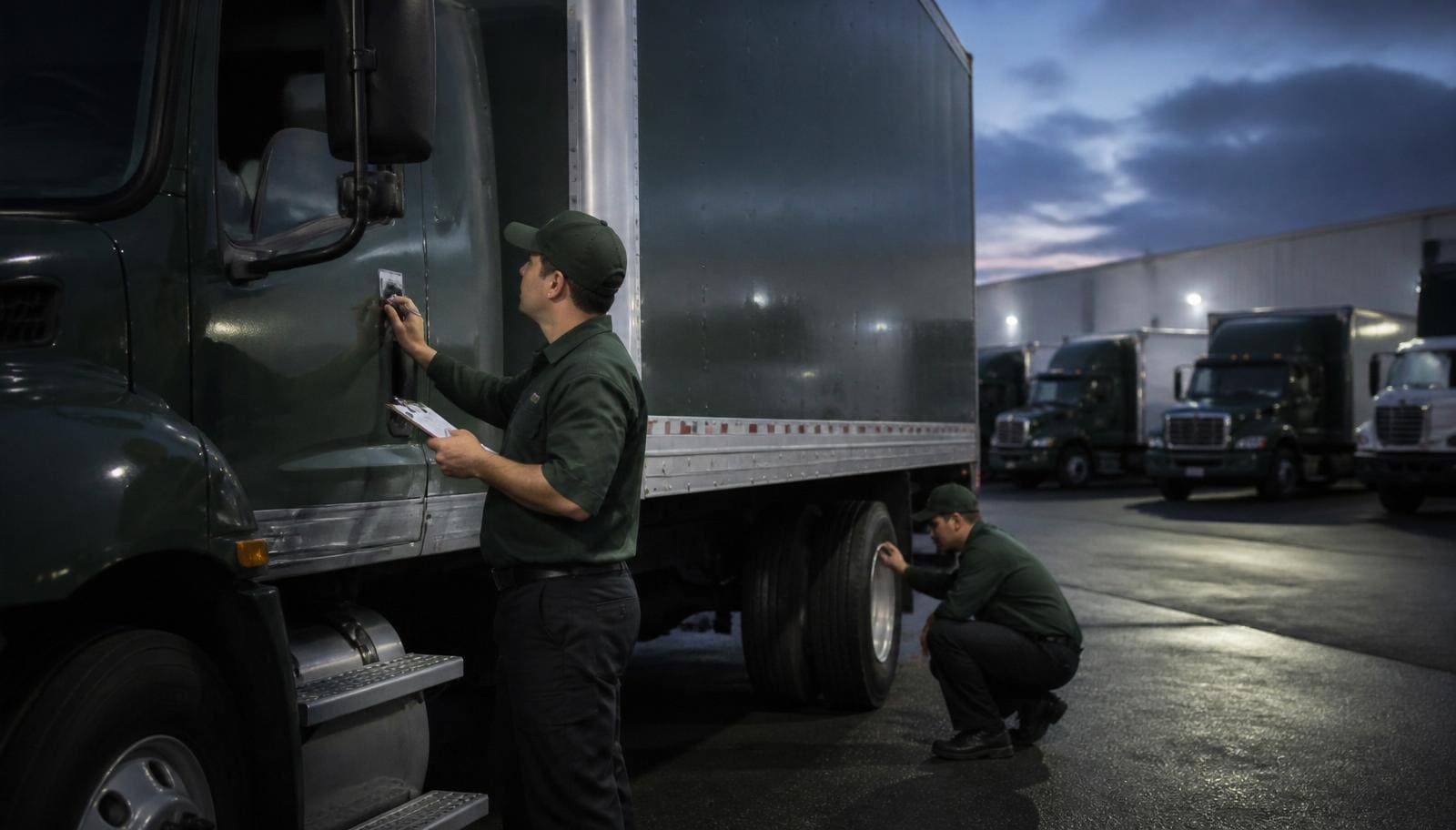
There are more than 17,000 active household-goods carriers registered with the FMCSA. Roughly one in five would not survive a serious operational audit. If you are picking a long distance moving company, vetting is the difference between hiring a professional interstate carrier and rolling dice on the internet. Here is the exact checklist a serious mover runs on itself, and the one you can run before you sign.
The paper floor.

Every long distance moving company operating across state lines must hold active federal authority. This is not optional and not hard to verify. Pull the company's USDOT number on the FMCSA SAFER System (https://safer.fmcsa.dot.gov) and confirm:
- Active USDOT and MC (Motor Carrier) numbers with authority granted, not pending.
- Registered as a household goods (HHG) carrier, not just freight, the two authorities are different.
- Cargo insurance at or above published minimums, verified with the carrier's agent, not a screenshot.
- General liability and workers' compensation on file and current.
- BOC-3 process agent designation for legal service across states.
- Complaint history and closed enforcement cases (visible on the FMCSA licensing and insurance portal).
TruMove's SaferWeb lookup tool pulls this same data on any long distance mover you want to check in about 15 seconds. If the mover you are talking to does not appear, or the authority is inactive, stop the conversation.
The safety layer.
The FMCSA's Safety Measurement System (SMS) scores every long distance moving carrier across seven BASICs: unsafe driving, hours-of-service compliance, driver fitness, controlled substances and alcohol, vehicle maintenance, hazmat, and crash indicator. TruMove reads SMS scores the way an actuary reads a policy: any BASIC in the alert range triggers a conversation, and any two in the alert range triggers a decline. A safe truck driven by a driver whose HOS log looks like fiction is not a safe long distance move.
The people layer.
Interstate long distance moving crews walk into homes. Every driver on a TruMove-approved carrier passes a motor-vehicle record check, a criminal background check calibrated to residential access (not the generic freight-driver template), and drug and alcohol testing under DOT Part 40. Continuous monitoring is non-negotiable, because a clean record on hire day is not a clean record on move day 18 months later.
A safe truck driven by a stranger you did not vet is not a safe move.
The operational layer.
Equipment inspection at intake and annually. Claims ratio (claims divided by total moves) rather than raw claims count, because a busy carrier will always have more absolute claims than a small one. Customer contact records to confirm the reviews are real and traceable. On-time delivery window performance across the last twelve months of interstate moves. TruMove watches these small numbers because the small numbers are where the pattern lives: rising claims ratio and slipping on-time delivery are almost always early warnings of a long distance moving company in trouble.
Red flags before you sign.
The FMCSA has published the same long distance moving red flags for over a decade because the scam pattern rarely changes:
- No in-home or virtual video survey before a firm quote.
- Large upfront deposit demanded (more than a small reservation fee).
- Cash, wire, or crypto only. No credit card option.
- No physical business address, or the address is a UPS Store.
- Quotes wildly under every other bid you received.
- The company answers the phone with a generic 'Moving Company' instead of a name.
- The email domain does not match the company website.
- No written binding-not-to-exceed estimate available on request.
Any one of these should slow you down on a long distance move. Two or more should end the conversation.
Why this matters to you.
You do not have to run this audit yourself on every long distance moving company you consider. That is the point of a vetted carrier network. When your assigned TruMove-network carrier arrives at your door, you are looking at an interstate mover that cleared every gate above and is monitored every month to make sure it still does. If you want to run the same checks yourself before you shortlist a moving company, our SaferWeb tool is free and returns the same FMCSA record we start with.
Long distance moving questions, answered.
How do I verify a long distance moving company is licensed?
Every interstate long distance moving company must have an active USDOT number and, for household goods, an active MC number. Verify both at the FMCSA SAFER System (https://safer.fmcsa.dot.gov) or through TruMove's SaferWeb lookup. The company should be listed as an authorized household goods (HHG) carrier, not freight-only.
What is a good FMCSA safety score for a long distance mover?
FMCSA does not publish a single grade. Look at the seven BASIC categories in the Safety Measurement System and confirm the carrier is not in the alert range on unsafe driving, hours-of-service, driver fitness, controlled substances, vehicle maintenance, hazmat, or crash indicator. A carrier in the alert range on two or more BASICs is a decline.
How can I spot a long distance moving scam?
The FMCSA-documented red flags are: no in-home or video survey, large upfront deposit, cash-only or wire-only, no physical address, and a quote dramatically lower than every other bid. Any two of these together should end the conversation.
How much cargo insurance should a long distance mover carry?
Federal minimums for interstate household goods movers are $750,000 in general commercial auto liability. Cargo insurance minimums vary but the important number is whether the carrier offers full-value protection (FVP) on your specific declared value. Verify both directly with the insurance agent named on the certificate, not just the certificate itself.
Are broker-arranged long distance moves safe?
Household goods brokers are separately licensed by FMCSA and can be legitimate, but the accountability picture is different: the broker sells you the move, an unknown carrier performs it. If you use a broker, insist on knowing the actual carrier's name, DOT, and MC before load day, and run the FMCSA vetting checks above on that carrier.
Continue your move planning.
Related long distance moving guides.
Where the numbers and rules come from.
Every regulation and price benchmark cited above is drawn from primary federal sources. Verify any claim yourself.
- SAFER System, Company Snapshot
FMCSA
Public USDOT / MC authority, insurance status, and inspection history.
- Licensing & Insurance Public Portal
FMCSA L&I
- Part 40, Drug and Alcohol Testing Program
U.S. DOT
Federal standard TruMove-approved crews are tested against.